Before we bring in the new

The last day of 2020. It’s been tough for most people, illness, financial insecurity, loneliness, fear. Loss of loved ones and being unable to say goodbye.

As hard as it is not to focus on all the difficulties of 2020, I wanted to reflect on the good that came out of it. The sense of community. Putting the welfare of others before ourselves. The imagination and ingenuity used to bring people together safely. The sharing and the hope.

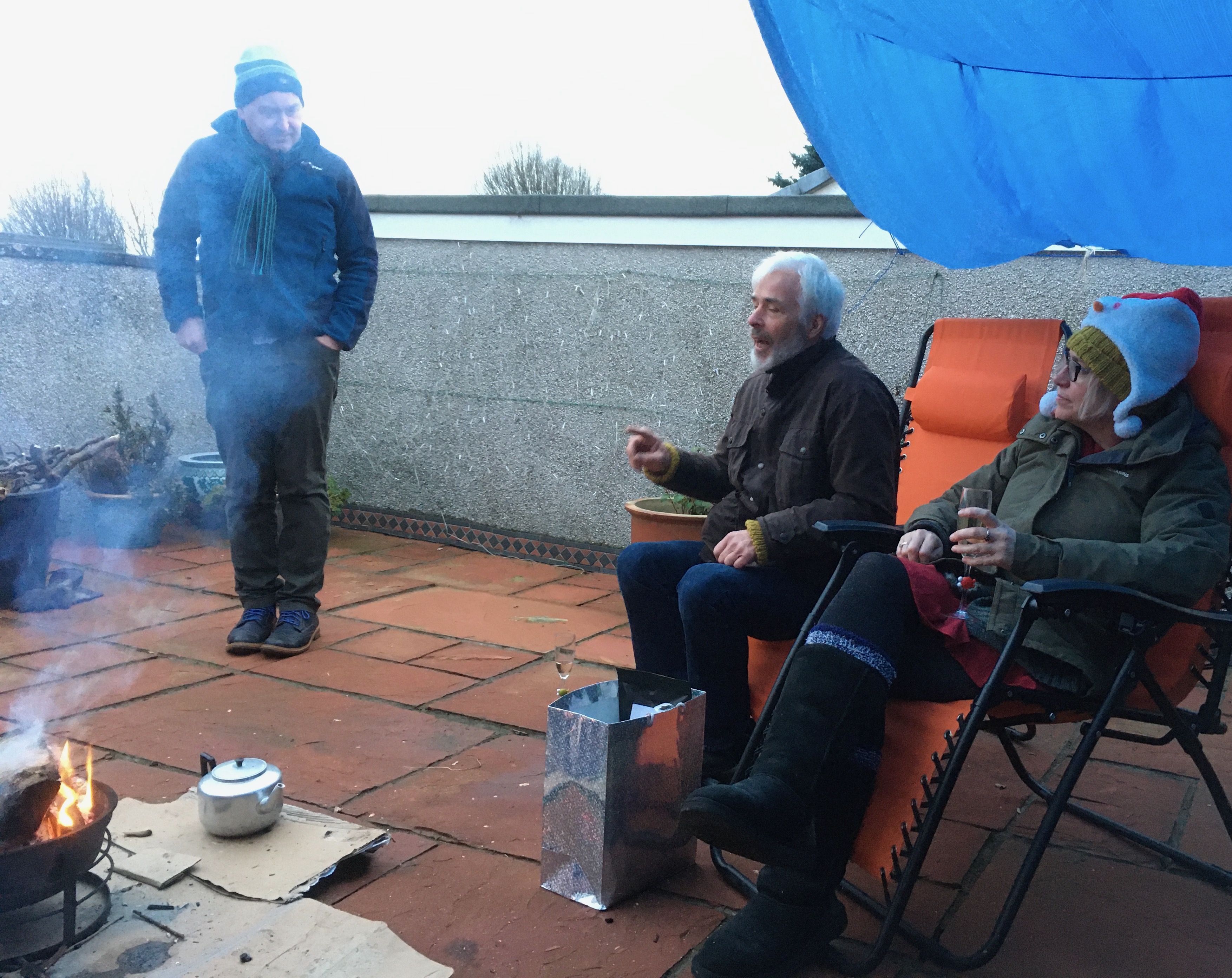
For Paul and I we have a lot to be thankful for: though many of our friends were affected by the virus, we lost only one member from our extended family (although still one too many). Both sets of parents stayed well, despite an operation and several hospital trips. We had regular work and thanks in particular to our friends Gail and Shirish, we were never short of food.

We also had space and quiet to finally explore the experience of my transplant: the impact it had on both of us. Part of that was the publishing of my book, which opened up feelings we’d locked away, perhaps for the better at the time. Through talking about what happened we realised there were emotions deeply buried under layers of well-rehearsed anecdotes, used to divert attention from things too painful to contemplate. 

For several weeks during the production of my book, my sleep was interrupted by the image of the theatre doors, immediately before I was wheeled in for my operation, against the ghostly echo of Paul’s footsteps walking away. I would wake, shaking, heart racing in the remnants of a dream where I’d been abandoned, yet again, by Paul or my family or my closest friends. A skin-crawling fear of being ignored. Unseen. Of no-one hearing me. And on its coat-tails, guilt. Thoughts of those whose reality renders my worst fears insignificant. Of my donor and their family.

As with most things, time and talking soothed my fizzled body and mind and here, at the endpoint of a year like no other, I wanted to acknowledge, in writing and from my own perspective, the incredible resilience and kindness of those around me. For friends who wrote or called, who sent cards and texts (and penguins). Of neighbours who shared food and laughter. Of all those who gave so generously and supported so effusively the launch of My Heart’s Content. And family, of course family. Family who were there and are there. Always.

There’s no doubt the shadow of 2020 will reach long into the future, for many reasons and one in particular. But for me it was the year I published my first book. The year Paul and I fully realised the extent of our community. The year my mum began to finally recover. The year I gave my first interview as an author. A year where people actually read my words and liked them, loved them in some cases, and graciously shared their thoughts with me. A year which cemented old friendships, found new ones and reconnected with some who had temporarily gone astray.

For me 2020 was the year I transitioned to being an author. The one thing I’d always craved. A childhood dream fulfilled. The year I finally found my home.

HAPPY NEW YEAR!

Bring on 2021.

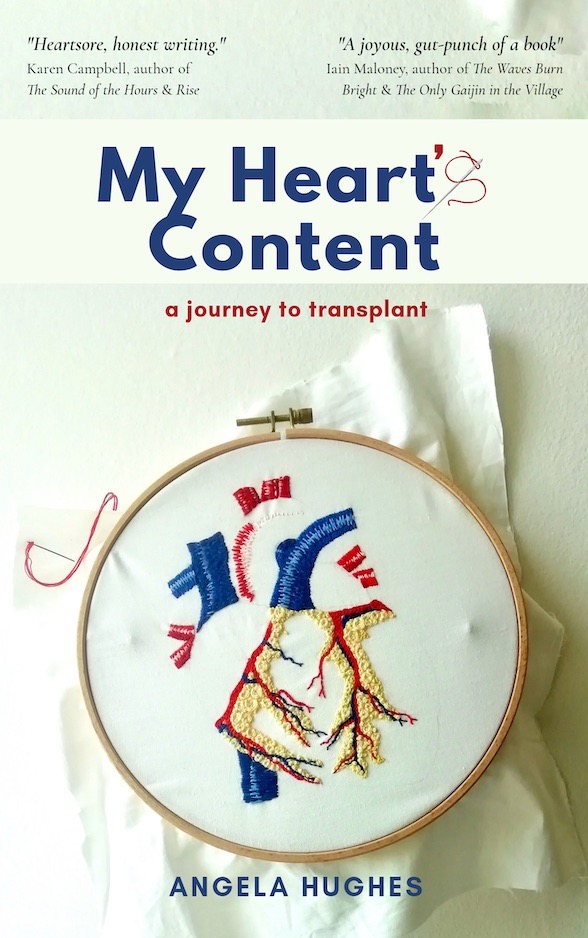
If you haven’t yet read My Heart’s Content and would like to do so, it’s available at: Liminal Ink

*Cover image for My Heart’s Content by Laura Donald

Putting it out there

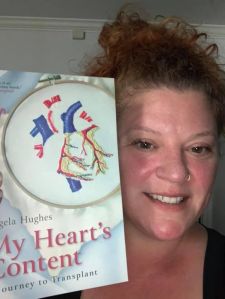
On Thursday 22 October, My Heart’s Content was officially ‘released’. There was no event, as such, but a number of those who supported the Kickstarter campaign and had read pre-release copies, took part in a literary flash mob – a fancy way of saying they shared pictures and encouraging words on social media. It may not have been grand but it was special. It laid down a marker: my first book was officially out there. Now there was the simple matter of bringing it to the attention of potential readers.

When Paul and I decided to set up Liminal Ink and publish my book ourselves, we weren’t without some experience in the area. Paul has a PhD in Publishing and we both have MLitts in Creative Writing. Further, as my book had originally been signed to a publisher, we had a wee bit of insight into how the process worked, and as a former press officer, I had some idea of promotion. However, there were a couple of things we hadn’t factored in: potential difficulties with distribution, and my mum going into hospital.

Undeterred we enlisted some help with promotion and decided that for now, we would handle the distribution ourselves. During a week off from work, fully masked and maintaining an acceptable social distance, we drove around Scotland, delivering books to our Kickstarter supporters. We hadn’t seen most of our friends for at least six months and despite partially obscured faces and muffled voices, being able to stand on a doorstep, or in a garden, or out on the street, and see people in ‘real-life’ was disproportionately exciting and emotional. The ‘you look great, have you done something different with your hair?’ jokes never grew tired; the urge to grab each of them and hold on for a very long time, never lessened.

Our mini-tour reinforced my belief in the value of community. It also reiterated my idea that the book was already a success. Sure the words ‘bestseller list’ and the title of my book were unlikely to feature in the same sentence any time soon (never say never), but the tingle of excitement I felt each time I handed over my book to someone would be hard to be beat, a sensation that would be amplified as people gradually began to give me their feedback. And yes, I do realise that those who didn’t like it would be unlikely to say so, or at least unlikely to say so via an email / phone call / text / WhatsApp message to me, but hey, don’t burst my bubble quite yet.

Back in the world of trying to reach other readers, Paul contacted some of the independent bookshops: a couple took it, others mentioned how they ordered their copies through a certain distributor. We applied to be included with said distributor and sent off our sample copy. It takes up to six weeks to be added to the stock list. If the distributor likes it. And so we wait.

Meantime we keep drip feeding social media. And leaving messages for book shops. Of course I’d love it to find its way into the hands of someone with a larger presence, a louder voice. Someone who, should they like it, could influence others. Act as a champion. At the same time I fight shy of actively seeking to get it to such a person. Why? Well that’s a question with no simple answer.

Perhaps because I love the thought of my book being discovered. Passed on by a friend brimful of my words. The story alive in their enthusiasm. I would be delighted if each person who reads my book would tell one or two others. That they too would like and share it with another. And somewhere along the way, my whisper of a story would become a raised voice and then a shout. On merit.

Or maybe it’s my unease with marketing, which developed during our MLitt, when a well-known literary agent visited to talk to us about the industry side of writing and publishing. One of the main pieces of advice was that writers should always be considering their potential readers, as well as where their book would sit in a bookshop – which genre; under what label. To make it easier for marketing. There was also talk of the ‘elevator pitch’ – the ability to succinctly describe (or sell) your book in the length of time it takes to ride in a lift, although it wasn’t clear how many floors you would be ascending and whether it would call at intermittent ones along the way. I find this element of writing hard. It seems cynical. Contrived. And yet I know that to make a living from writing, it was, and is, sound advice.

At the end of the talk, my perturbed expression attracted the attention of the speaker. I explained my disappointment that writing should be bound by an invisible audience; defined by a slot on an imaginary, commercial bookshelf. My naivety was audible even to myself. But it was more than that. For me, writing constantly evolves. And what I’ve discovered is that even after the book is written, the ‘story’ isn’t fixed.

When I wrote my book, I imagine my elevator pitch was along the lines of ‘firsthand experience of waiting for, and receiving, a new heart. Of what that means in real terms – an insight of how it feels to be suspended between life and death.’ I know, not terribly snappy but you get the gist. And the thing is, it is that. And it isn’t. What I discovered from early feedback is that some readers consider it a love letter: to family and friends; to our amazing NHS; to the kindness of strangers. To Paul. To the human spirit and the will to survive. And it is that too.

So if you do stumble across it, if you read it and like it, tell someone. Share why it moved or challenged or annoyed or fascinated you. What the story means to you. Because whatever you get from it, however you read it, that’s the book it was meant to be.

My Heart’s Content: A Journey to Transplant – available from: Liminalink.com